
Valuation Protocol: Cladding on Buildings
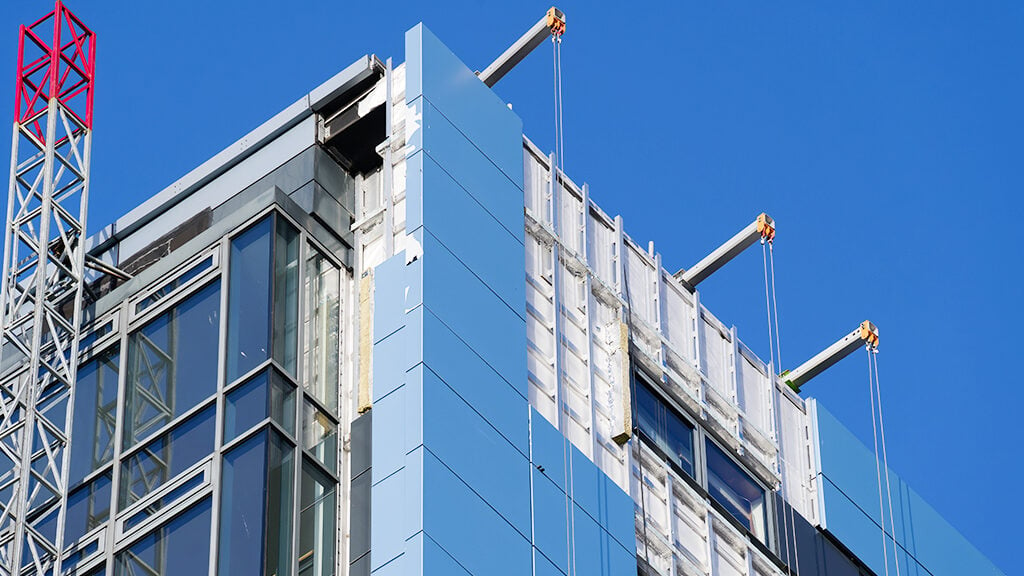
The API standards team have undertaken a review of the Valuation Protocol published by the API on 3 September 2021 and updated the content, including changes to the sample clauses based on legal input and the addition of another scenario for when the Valuer has confirmation that the cladding is compliant.
This Valuation Protocol comes into effect on 1 January 2025. The API permits and encourages earlier adoption.
To view the current and withdrawn Valuation Protocol relating to cladding on buildings click here.
Introduction
This Valuation Protocol (VP) is intended to provide guidance to API Valuers undertaking valuations of residential units/apartments in buildings/developments of more than three (3) stories for banks/lenders and their LMIs utilising the PropertyPRO Report format.
This VP also provides guidance for Valuers undertaking valuations for any purpose, of residential units/apartments in buildings/developments and other non-residential buildings/developments, where cladding (as defined below for the purpose of this VP) is utilised on the exterior of the building.
The API is aware that since 2017 State and Territory Governments started taking action to restrict or ban the importation and or use of non-compliant cladding.
This VP is not provided, by the API, as a substitute for the Valuer’s own investigations and proper enquiries and professional skill and judgement in relation to cladding issues as referred to in this VP and more generally. Nor is this VP provided as the prescriptive general principles and guidance on cladding issues. It is not guidance provided by the API in lieu of expert, legal and or other advice on cladding issues.
Definitions
Defined terms below and elsewhere in this VP have been included for the interpretation and understanding of certain stated terms used in this VP.
Where a defined term is used in this VP it is identified as an italicised term.
“appears to be clad” means that the building/development appears to be either wholly or partially ‘clad’ with aluminium composite panel (ACP), expanded polystyrene (EPS) or similar products, excluding glazed areas.
“cladding” in the case of building construction, is the application of one material over another to provide a ‘skin’ or extra layer to the exterior of a building/development. It is used to provide a degree of sound and thermal insulation and weather resistance, and to improve the appearance of buildings.
“cladding issue(s)” means an issue relating to compliant cladding and or non-compliant cladding that a Valuer exercising professional judgement should report.
“compliant cladding” means ACP, EPS or similar cladding products and/or the method of their attachment as are from time to time designated as compliant/conforming to Laws and Codes (defined below); that is, meeting such Laws and Codes and as such in accordance with applicable Laws and Codes.
“known to be clad” means that the Valuer is aware that the building/development is either wholly or partially ‘clad’ with ACP, EPS or similar products, excluding glazed areas.
“Laws and Codes” means any laws, legislation, regulation, codes and or any relevant and applicable Australian Standard relating to cladding and the fixing/attachment of that cladding in building construction.
“Valuer” means members of the API who hold API certification of CPV, CPV (Residential) or RPV.
“non-compliant cladding” means ACP, EPS or similar ‘cladding’ products and/or the method of their attachment as are from time to time designated as non-compliant/non-conforming to Laws and Codes; that is, not meeting the requirements of such Laws and Codes and as such not in accordance with applicable Laws and Codes.
General Principles
When instructed to undertake a PropertyPRO Report a Valuer is required to provide their opinion of the market value of the subject property in accordance with the PropertyPRO Supporting Memorandum (PPSM).
The Valuer is required to inspect the subject property, collect relevant property information, research the market, undertake at least a ‘kerbside’ inspection of the sales evidence and then prepare a PropertyPRO Report that meets requirements of the PPSM.
When a Valuer is requested to provide a non PropertyPRO Report for any purpose of a property in a building/development that is ‘clad’, then the general principles stated in the VP, below apply.
The sample wording for the varying scenarios can and should be modified as appropriate to fit the requirements of the valuation report, it’s purpose and the client or other agreed user of the report. The sample wording is not to be used as one size fits all.
Valuers undertaking valuations of real property must ensure that they are not holding themselves out in any way, either expressly or impliedly, as building/construction/cladding experts, unless they hold appropriate qualifications/certification that would be recognised as such experts at law.
Expert assessment by a regulatory or authoritative body is required to determine whether cladding is compliant/conforming with Laws and Codes.
The Valuer’s role when undertaking an inspection is to identify and report on known or observable cladding issues that are reasonably identifiable from their physical inspection of the subject property in accordance with accepted valuation practice.
Valuer’s should identify whether the building/development, in which the subject unit/apartment is located, appears to be clad or is known to be clad and clearly comment on this in the valuation report. In these circumstances Valuer’s should also confirm whether they hold evidence that the cladding is compliant cladding or non-compliant cladding.
Valuers should include comments in valuation reports on any cladding issue(s) These comments should make it clear that professional building or other similar expert advice is required before any reliance can be placed on the valuation report and additionally that such expert advice is provided to the Valuer for comment and review before any reliance can be placed on the valuation report.
In the context of cladding, the investigations made by Valuers and the advice that Valuers provide in valuation reports is on the following bases, Valuers;
- are not experts in building materials, unless they hold appropriate qualifications/certification that would be recognised as such experts at law,
- are not qualified to determine the type of cladding present in a building/development from a visual inspection alone,
- are not able to identify from a visual inspection whether the cladding used, or method of attachment, is compliant/conforming or non-compliant/non-conforming, and
- are not expected to make or be required to make any enquiries into whether ACP or EPS cladding (or similar) is compliant/conforming or non-compliant/non-conforming.
Valuers must not accept, or agree to, instructions to undertake investigations or provide advice in a field of practice in which they do not have sufficient skill and expertise, such as the identification of and determination that the type of cladding present in a building/development is compliant/conforming or non-compliant/non-conforming.
Valuation reports should include appropriate wording to confirm these bases, see examples on the following pages, for varying scenarios, provided for guidance only.
Lenders/LMIs and any other agreed reliant party/parties must not rely upon the valuation report without seeking expert advice from appropriately qualified experts on cladding issues where the Valuer has alerted the reader/user of the valuation report to potential or actual cladding issues.
Sample Wording
The sample wording included on the following pages, for each of the varying scenarios, can and should be modified as appropriate to fit the requirements of the valuation report, it’s purpose and the client or other agreed user of the report.
The sample wording is not to be used as one size fits all.
Building/Development ‘appears to be clad’
Where the Valuer identifies that a building/development appears to be clad and does not hold evidence that the cladding is compliant cladding, the Valuer should include a comment in the valuation report along the lines of;
The building/development appears to be clad and as at the date of our inspection and valuation we do not hold evidence that the cladding used, or method of attachment, is compliant/conforming or non-compliant/non-conforming.
This valuation report has been prepared under the assumption that the building materials used, as well as the application and installation of those materials, comply with all approvals, relevant law, legislation, legal codes and or standards. Should this not be the case, we reserve the right to review our valuation.
We are not experts in ‘cladding’ or methods of attachment and are not qualified to determine whether the cladding is compliant or non-compliant cladding. We do not accept responsibility or liability for any losses whatsoever arising from the Valuer failing to identify non-conforming or non-compliant cladding.
Prior to any reliance on the Valuation Report by any Lender/LMI or any other agreed reliant party, those parties must make their own enquiries regarding the cladding used, including the application, installation, specification and utilisation of the cladding, and its compliance with all approvals, relevant law, legislation, legal codes and or standards.
Until the reliant party/parties undertake the enquiries stated in the paragraph immediately above and refers the outcome of those enquiries back to the Valuer for further review and consideration, those parties must not rely upon the valuation.
When providing a PropertyPRO Report, the Valuer must also raise the Improvements Risk Rating to a minimum of 4.
Members should seek appropriate legal advice as to proper use and applicability of any proposed and or suggested qualifications, assumptions, disclaimers, limitations and or “warnings”.
Building/Development ‘known to be clad’
Where the Valuer is aware that the building/development is known to be clad and does not hold evidence that the cladding is compliant cladding, the API recommends the Valuer follow the same approach as outlined above, with comments along the lines of the following included in the valuation report;
The building/development is known to be clad and as at the date of our inspection and valuation we do not hold evidence that the cladding used, or method of attachment, is compliant/conforming or non-compliant/non-conforming.
This valuation report has been prepared under the assumption that the building materials used, as well as the application and installation of those materials, comply with all approvals, relevant law, legislation, legal codes and or standards. Should this not be the case, we reserve the right to review our valuation.
We are not experts in cladding or methods of attachment and are not qualified to determine the whether the cladding is compliant or non-compliant. We do not accept responsibility or liability for any losses whatsoever arising from the Valuer identifying or failing to identify non-conforming or non-compliant cladding.
Prior to any reliance on the Valuation Report by any Lender/LMI or any other agreed reliant party, those parties must make their own enquiries regarding the cladding used, including the application, installation, specification and utilisation of the cladding, and its compliance with all approvals, relevant law, legislation, legal codes and or standards.
Until the reliant party/parties undertake the enquiries stated in the paragraph immediately above and refers the outcome of those enquiries back to the Valuer for further review and consideration, those parties must not rely upon the valuation.
When providing a PropertyPRO Report, the Valuer must also raise the Improvements Risk Rating to a minimum of 4.
Valuers should also state in the report the basis and source of their knowledge relating to the presence of cladding.
Valuers should seek appropriate legal advice as to proper use and applicability of any proposed and or suggested qualifications, assumptions, disclaimers, limitations and or “warnings”.
‘Non-Compliant Cladding’ known to be present
Where the Valuer is aware that the building/development is known to be clad and also holds evidence that the cladding is non-compliant cladding, the Valuer must include in the valuation report a comment along the lines of;
The subject property is situated in a building/development which is known to the Valuer through publicly available information to contain non-compliant/non-conforming cladding.
This valuation is prepared based on publicly available information [or insert any other source of information that has become available to the Valuer], as at the date of valuation, relating to cladding to the subject building/development and has been completed on the basis of the Valuers professional opinion as to any negative impact of this information.
We are not experts in building materials and are not qualified to determine the existence of non-conforming or non-compliant cladding and have relied on publicly known information. We do not accept responsibility or liability for any losses whatsoever arising from identifying or failing to identify non-conforming or non-compliant cladding.
Prior to any reliance on the Valuation Report by the Lender/LMI or any other agreed reliant party, those parties must make their own enquiries regarding the cladding used including the application, installation, specification and utilisation of the cladding and its compliance with all approvals, relevant law, legislation, legal codes and or standards.
Until the reliant party/parties undertake the enquiries stated in the paragraph immediately above and refers the outcome of those enquiries back to the Valuer for further review and consideration, those parties must not rely upon the valuation.
When providing a PropertyPRO Report, the Valuer must also raise the Improvements Risk rating to a 5 and trigger VRA 1.
Valuers should also state in the report the basis and source of their knowledge relating to the presence of cladding and the source of the evidence that the cladding is non-conforming or non-compliant cladding.
Valuers should seek appropriate legal advice as to proper use and applicability of proposed and or suggested qualifications, assumptions, disclaimers, limitations and or “warnings”.
‘Compliant cladding’ known to be present
Where the Valuer is aware that the building/development is known to be clad and also holds evidence supported by, expert advice, statutory and or legal bases that the cladding is compliant cladding, the Valuer should include a comment in the valuation report (including a PropertyPRO report, as applicable) along the lines of;
The subject property is situated in a building/development which is known to the Valuer through publicly available information and or evidence supported by expert advice, statutory and or legal bases [or insert any other source of information that has become available to the Valuer], to contain compliant/conforming cladding.
This valuation is prepared based on publicly available information and or evidence supported by expert advice, statutory and or legal bases [or insert any other source of information that has become available to the Valuer], relating to the subject building/development having compliant cladding as at the date of valuation.
We are not experts in building materials and are not qualified to determine the existence of non-conforming or non-compliant cladding and have relied on information of the type referred to above. We do not accept responsibility or liability for any losses whatsoever arising from identifying or failing to identify non-conforming or non-compliant cladding.
Prior to any reliance on the Valuation Report by the Lender/LMI or any other agreed reliant party, those parties must make their own enquiries regarding the cladding used including the application, installation, specification and utilisation of the cladding and its compliance with all approvals, relevant law, legislation, legal codes and or standards.
Until the reliant party/parties undertake the enquiries stated in the paragraph immediately above and refer the outcome of those enquiries back to the Valuer for further review and consideration, those parties must not rely upon the valuation.
Valuers must also state in the report the bases and sources of their knowledge relating to the presence of compliant cladding and the sources of the evidence that the cladding is compliant cladding.
Valuers should clearly state in the valuation report that they do not in any way endorse and or accept such knowledge/information and or evidence relating to cladding, that they had regard to, as being their knowledge/information or that the evidence relied upon is evidence produced by them.
Valuers should seek appropriate legal advice as to proper use and applicability of proposed and or suggested qualifications, assumptions, disclaimers, limitations and or “warnings”.
Value and/or Marketability Issues
Where there is known to be an adverse impact on the value and/or marketability of the subject property, the Valuer must ‘risk rate’ the report appropriately including supporting comments. This is in addition to raising the Improvements Risk Rating for ‘cladding’ as noted above.
Sales evidence and market information
Sales within the subject development should be included where available and any known marketing information regarding the sale transactions should be commented on. Properties ‘on the market’ in the same development could also be commented on.
As noted previously, this Valuation Protocol is provided as a guide for Valuers and is not a substitute for Valuers exercising their own professional skill and judgement.
The API is committed to the promotion of best practice within the property industry and welcomes feedback to help achieve this goal.
If there are any comments or feedback regarding this Valuation Protocol, please do not hesitate to contact us at [email protected].
Download a copy of this valuation protocol here.
Related Posts
 Standards
API SSC Response to IVSC Perspectives Paper: Managing and Communicating Value Uncertainty
 Standards
API Submission to NSW DCCEEW: Home Energy Efficiency Ratings
 Standards
API Submission to Victorian Department of Transport & Planning on Consultation Paper: Protecting Privacy in the Register of Land
 Standards
API Submission to the Assistant Secretary, Treasury on the Treasury Consultation Paper: Minimum Tax on Discretionary Trusts
 Standards
The CGT Changes and Property Valuations: What you need to know
 Standards